The Witness Frame — The 3-Body Problem Has Always Been Solved
One-Line Pitch
The 3-body problem is only unsolvable from outside the timeline. The universe solves it in real time, exactly once. The solution is the path itself.
The Category Error

The 3-body problem is declared unsolvable under a hidden assumption: that solution means prior prediction from outside the timeline. Call this the Predictor Frame. The Predictor stands above time, generates a model meant to run parallel to reality, and is frustrated when chaos causes exponential divergence.
But this framing contains a ghost: the assumption that the universe needs to run twice — once to happen, and once for the model to verify itself against. In a universe that runs once, that second run never occurs. The Predictor Frame is not just practically frustrated. It is categorically misapplied.
There is another frame.
The Witness Frame

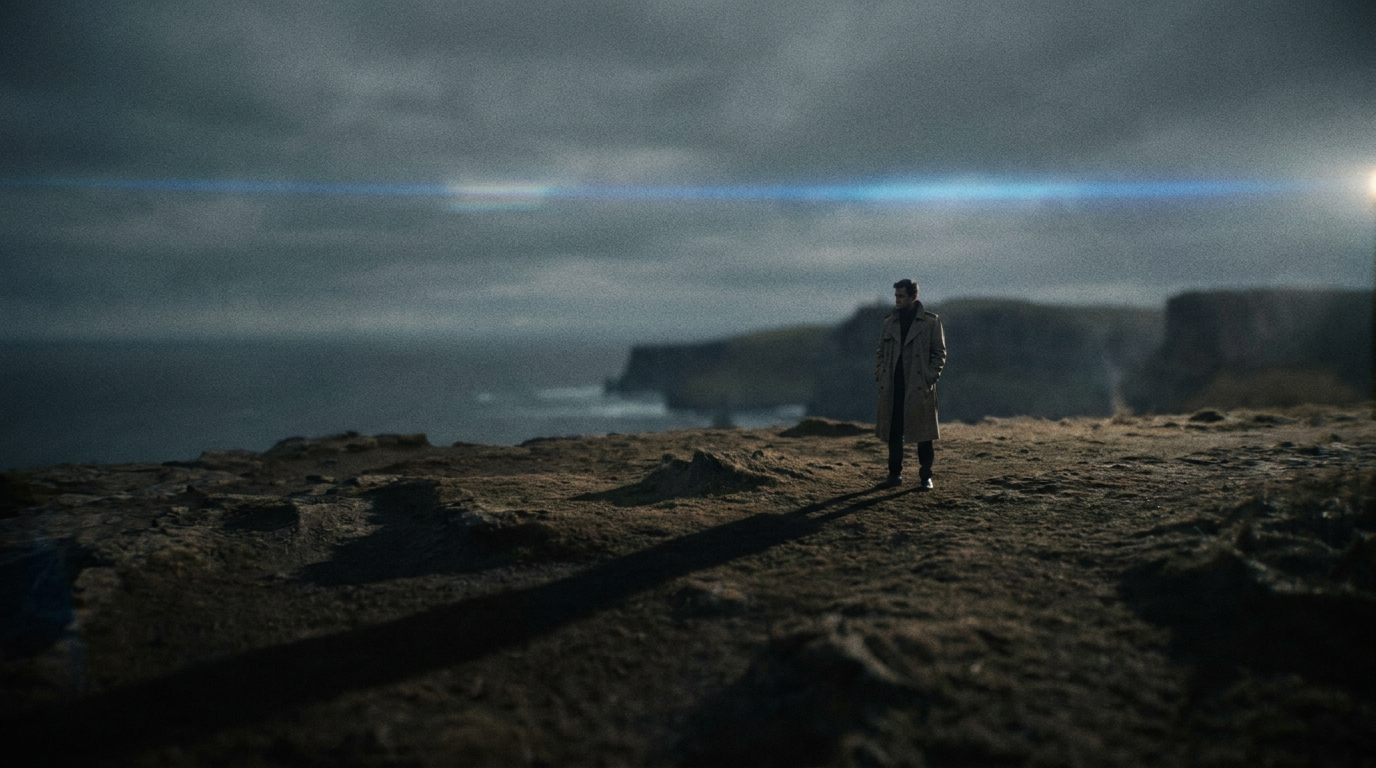
The Witness is embedded in the timeline. The Witness does not stand above the system; the Witness moves with it. And from inside the timeline, the question "can we predict what happens next?" dissolves entirely — because what happens next is happening.
| Predictor Frame | Witness Frame | |
|---|---|---|
| Position | Outside the timeline | Embedded within it |
| Goal | Prior knowledge of future states | Recognition of the unfolding |
| Chaos | The enemy — destroys predictability | The sculptor — defines the singular path |
| "Solution" | An algorithm that pre-generates the trajectory | The trajectory itself, as it occurs |
| "Impossibility" | Real, frustrating, the defining feature | A category error — doesn't apply here |
The Witness Axiom

For any dynamical system $S$ evolving in a single timeline $T$, the solution to $S$ is identically $S$'s own trajectory $\tau$. There is no external model that improves on $\tau$, because $\tau$ is the only instance that exists.
When we say the 3-body system is "chaotic," we mean:
$$\lim_{\delta \to 0} |\tau(t) - \tau'(t)| \to \infty$$
...the distance between nearby initial conditions grows without bound. But notice: this is a statement about the distance between trajectories that never occur. $\tau'$ is a ghost — a path from an alternate starting point that doesn't exist. Within the one timeline that does occur, $\tau$ is exact, complete, and fully known to the system living it.
Chaos as Authorship

A perfectly integrable two-body system traces an ellipse: elegant, closed, reproducible. It is the same story told forever. The 3-body system, by contrast, writes a story that has never been told before and will never be told again.
This is where emergent beauty lives. The chaos is not a failure of authorship — it is the mechanism by which something singular gets written. Remove the chaos, and you remove the singularity. What remains is a system with no particular reason to be interesting.
Chaos doesn't make the path unreal. It makes it unrepeatable. And unrepeatable is another word for alive.
The Observer Is One of the Bodies

This is where the framework deepens. The Witness embedded in the timeline is not a camera bolted to the outside of a sealed system. The Witness has mass. The Witness occupies a position. The Witness is one of the bodies.
To observe the 3-body system from within it is to already be part of the gravitational field. The observation does not collapse into a pre-existing truth — the observation is part of the truth's continuous generation. The Witness reads the path and, in reading it, writes a small part of it.
This doesn't require quantum mechanics. Classical chaos is enough. An observer with mass, at a specific position, at a specific moment, is already a perturbation. The system they're watching includes them.
The Witness does not stand outside and watch the universe run. The Witness is the fourth body.
Three Bodies, Three Voices

The natural narrative structure is already present in the system. Three bodies that do not know each other's future trajectories. Each "knows" only its own position, velocity, and the gravitational pull it feels right now. Together, without any individual body holding the full picture, they author a path no single one could generate alone.
This is the structure of any great story. No single voice predicts the ending. The ending is what the voices, pulling against each other, produce. The chaos between them is not noise — it is the plot.
The story doesn't end because someone predicted it correctly. It ends because it ran.
Connections
The Witness Frame is not an isolated thought. It is the same move made in several places already:
- The Latch→ — the cross-stream time witness; the Latch is what the Witness Frame becomes when the timeline has a record-keeping structure
- Fog of War — The Wet Ink Principle→ — the undetermined present becoming determined is exactly the moment the Witness reads the next step
- The Diff→ — reality as a live render pass; each numerical integration step of the 3-body system is one render call, and the Witness watches each frame resolve into the next
- The Temporal Lattice→ — the orbital mechanics of phase space; the strange attractor is the lattice structure beneath the chaotic surface
What Stays Unsolvable

Nothing here claims the 3-body problem is trivial. Long-range numerical prediction is still practically impossible for chaotic configurations. Engineers building spacecraft trajectories still need every tool in the kit.
The reframe is not about engineering. It is about what kind of thing the universe is. A universe in which "the solution" requires a prior predictive model is a universe that would need to run twice. This universe runs once. The solution is continuous, exact, and never needs to be checked against a model — because the model would have to be the universe itself.
The 3-body problem has always been solved. Just not by anyone standing outside it.