
SIMUL-MAKE
A Film Release Framework
Two films. Same day. One axis. Each complete alone. Together they reveal a third thing.
What This Is

Simul-Make is a structural framework for releasing two films simultaneously. Not a franchise. Not a sequel. Not an accident of cultural timing. Two films designed from conception to exist together, released on the same day, each complete as a standalone work, but built on a shared conceptual axis that only becomes visible when you know both exist.
The structure is about coexistence — the deliberate architecture of two works that belong together in time.
The Core Definition

A simul-make is a pair of films that satisfy ALL of the following criteria:
| # | Rule | Description |
|---|---|---|
| 1 | Simultaneous release | Both films are available to the audience on the same day. Not "same week" or "same season." The same calendar day. |
| 2 | Shared axis | There is a conceptual foundation that connects them. This is not necessarily a shared universe, shared characters, or narrative crossover. It is a thematic mirror — a relationship that exists at the level of meaning. |
| 3 | Equal weight | Neither film is designated as "primary." There is no main film and spin-off, no director's cut and theatrical version, no original and companion piece. Both films are first-class works. |
| 4 | Complete alone | Either film can be watched without the other and provides a full, satisfying experience. There is no dependency, no cliffhanger resolved only in the partner film, no "Part 1 / Part 2" structure. |
| 5 | Reveals a third thing | When both films are viewed (in any order), a relationship becomes visible that exists in neither film individually. This "third thing" is the point. It is the emergent property of the pairing. |
| 6 | Intentional design | The pairing was planned from conception. It is not accidental (Barbenheimer), not a marketing strategy applied to unrelated films, not a repackaging of existing material. The films were built knowing the other would exist. |
If a dual release fails any of these criteria, it is not a simul-make. It may still be a valid dual release — but it is a different structure.
What a Simul-Make Is NOT
| Pattern | Why it fails |
|---|---|
| Barbenheimer (Barbie + Oppenheimer, 2023) | Accidental. Not designed together. No shared axis. Culturally emergent, not architecturally planned. |
| MCU double-feature | Same universe, franchise logic. One often set up for the other. Not equal weight — Phase positioning creates hierarchy. |
| Part 1 / Part 2 release | Fails "complete alone." Each part requires the other for resolution. |
| Director's cut + theatrical | Fails "equal weight." The director's cut is positioned as superior. Same film, not two films. |
| Film + documentary about the film | Fails "equal weight." Documentary is subordinate — about the other, not alongside it. |
| Rerelease + new film | The rerelease is not new. Fails "intentional design" — the rerelease was not conceived with the new film. |
| Two films that happen to release the same day | Fails "shared axis" and "intentional design." Coincidence is not structure. |
The Shared Axis
The shared axis is what makes two films a simul-make rather than a double-feature. It is the conceptual relationship — the thing they are both about at a deeper level.
Examples of valid axes:
| Axis Type | Description |
|---|---|
| Temporal mirror | One film depicts the past, one depicts the future. The viewer exists in the present between them. |
| Elemental mirror | One film is about water, one is about earth. Or fire/ice, air/ground, etc. |
| Consciousness mirror | One film explores the internal (mind, awareness, soul). One explores the external (body, nature, action). |
| Geographic mirror | One film is set in the East, one in the West. Or North/South, above/below. |
| Genre mirror | One film is documentary, one is fiction — both about the same conceptual subject. |
| Protagonist mirror | Two films with different protagonists whose stories intersect at a specific moment or theme. |
The axis does not need to be explicit in either film. It can be visible only to those who watch both and understand the relationship.
The Third Thing
When both films are experienced, something emerges that exists in neither:
- The relationship between the two
- The tension or harmony between their perspectives
- The question that arises from holding both at once
This third thing is the purpose of the structure. It is what makes a simul-make more than two films released together. It is the emergent property — the thing created by coexistence.
Example: If Film A is a documentary about an event that happened in 1986, and Film B is a speculative fiction about an event that will happen in 2028, the third thing is: what does it mean to hold past and future simultaneously? What is presence?
The viewer cannot access this question from Film A alone or Film B alone. It requires the pairing.
Runtime and Other Constraints
Simul-make has no runtime requirement.
Unlike the 119 Minutes framework (which requires exactly 1 hour 59 minutes), simul-make is purely about release architecture, not runtime.
- Film A can be 90 minutes and Film B can be 3 hours
- Film A can be a 20-minute short and Film B can be a feature
- Both can be the same length, or wildly different
Simul-make can combine with other frameworks.
A simul-make can also be a 119. You could release:
- Two 119-minute films as a simul-make
- A 119 and a non-119 as a simul-make
- Ten simul-makes (20 films) with no 119 structure at all
The frameworks are independent and stackable.
Founding Example: The KA Films
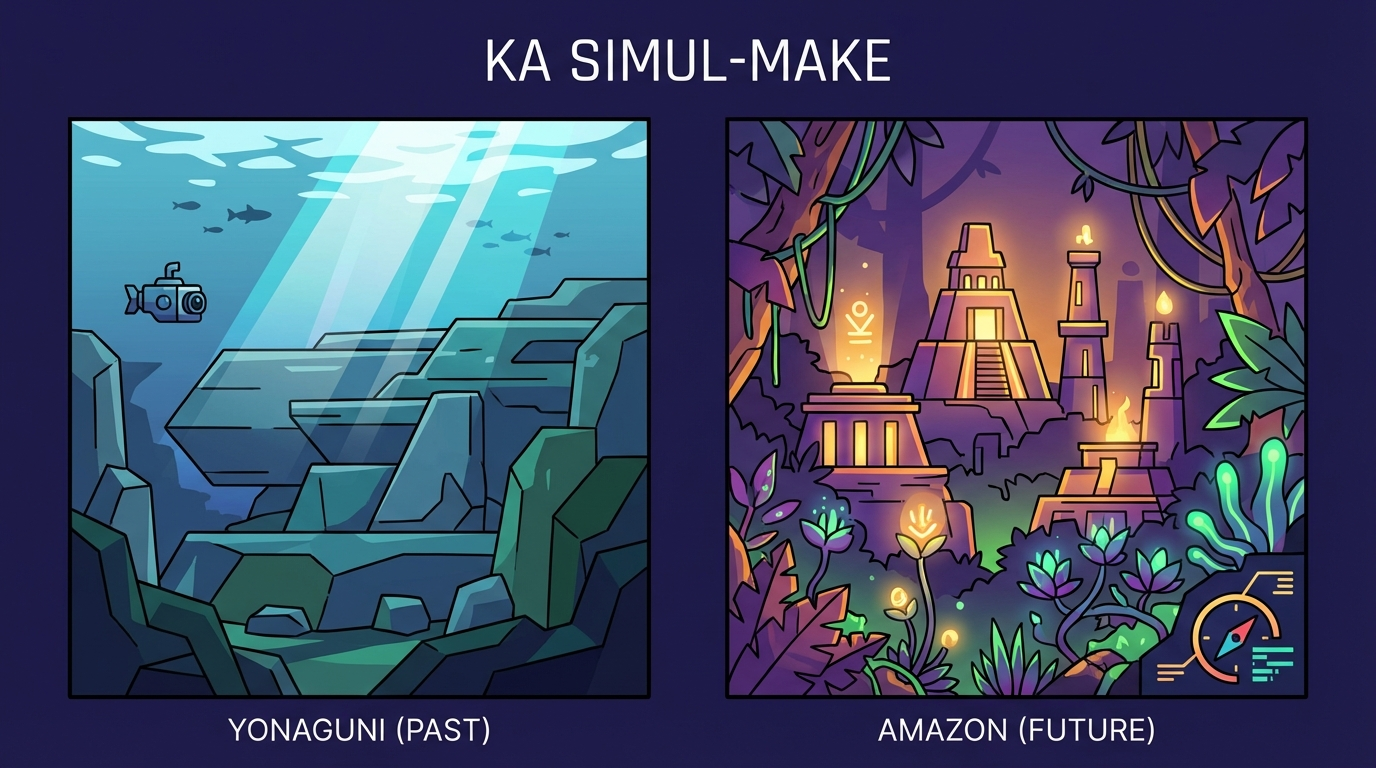
The first designed simul-make (as documented here) is the KA Simul-Make:
| Film A: The Sunken Temple | Film B: The City of Gold | |
|---|---|---|
| Subject | Yonaguni Monument, Japan | Lost Amazonian City |
| Time | 1986 (the past) | 20XX (the future) |
| Mode | Documentary | Speculative / prophetic |
| Element | Water — the ocean | Earth — the jungle |
| Consciousness | River of life, awareness, soul | Mother nature, body, embodiment |
| Discoverer | K.A. (Kihachiro Aratake) | K.A. (Kris Adams) |
| Hidden by | Sea level rise, 10,000+ years | Jungle canopy + European conquest |
| Guardian | Hammerhead sharks | The roots and vines |
| Discovery tool | Diving + sonar | LiDAR + expedition |
Shared axis: KA — the initials, the Egyptian word for the vital life force of the soul, the man born in 1986 (the same year the first temple was found).
The third thing: Consciousness (water, awareness, the past temple) and body (earth, nature, the future city) meet inside the viewer's present moment to produce awareness. The films are doing to the audience what the two temples are doing to the planet — bringing two edges of an ancient civilisation back into alignment through the act of simultaneous observation.
Release: Same day. Order does not matter. Either can be watched first or alone.
Variations
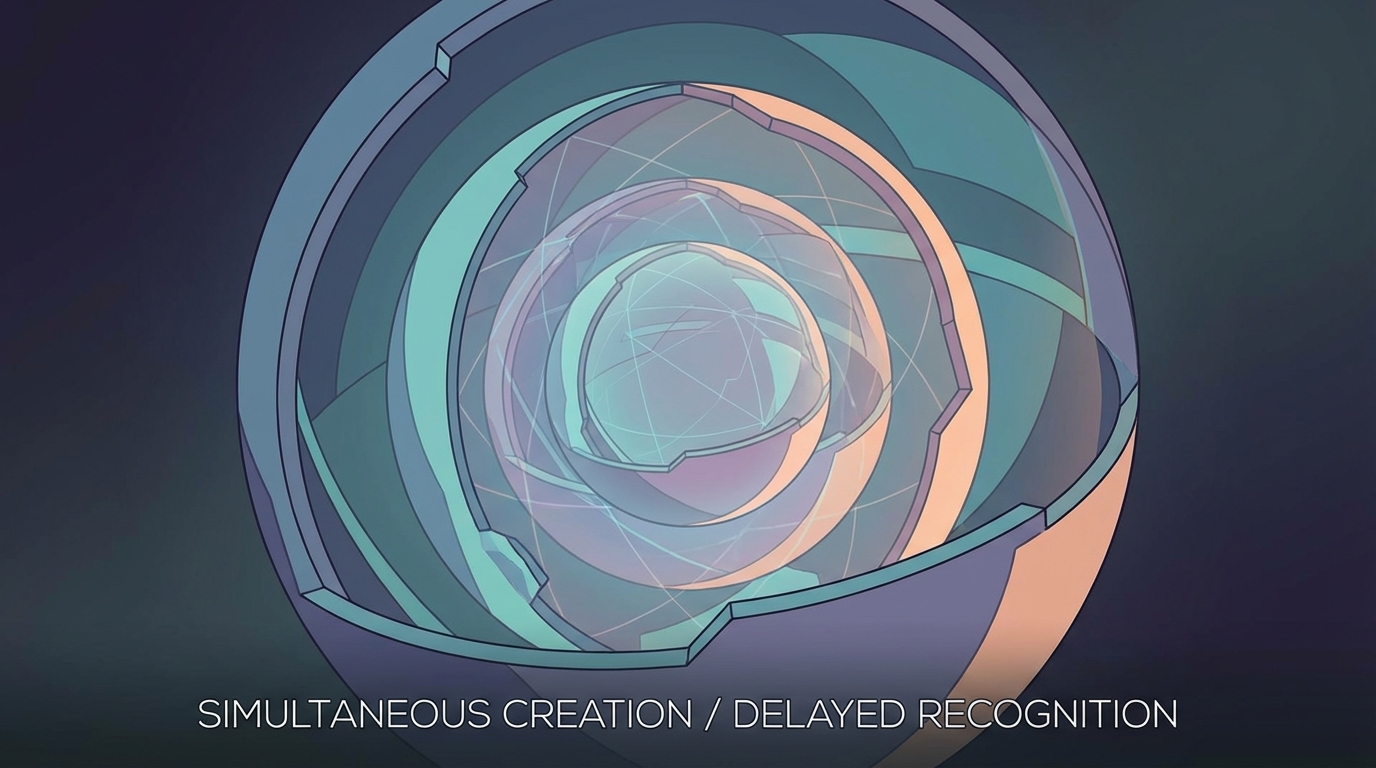
The Nested Simul-Make
A simul-make can contain simul-makes. Example: four films released on the same day, forming two simul-make pairs, which themselves form a meta-simul-make at the pair level.
The Delayed Awareness Simul-Make
Both films release the same day, but the fact that they are a simul-make is not announced. Audiences discover the relationship on their own, or it is revealed later. The structure still holds — intentional design is a creator-side criterion, not a marketing requirement.
The Cross-Medium Simul-Make
One "film" is a traditional feature. The other is a VR experience, or an album, or a live event. The structure applies if the criteria are met — simultaneous release, shared axis, equal weight, complete alone, reveals a third thing, intentional design.
The Infinite Simul-Make
More than two works released simultaneously, all connected by a shared axis. This scales the structure but requires more careful management of "equal weight" — each work must stand as a peer.
How to Evaluate a Dual Release

When asked "is this a simul-make?", check:
- ☐ Same day release?
- ☐ Shared conceptual axis (not just same IP)?
- ☐ Equal creative weight (no primary/secondary)?
- ☐ Each complete as standalone?
- ☐ Together they reveal something neither has alone?
- ☐ Designed together from conception?
All six must be true.
Relationship to 119 Minutes
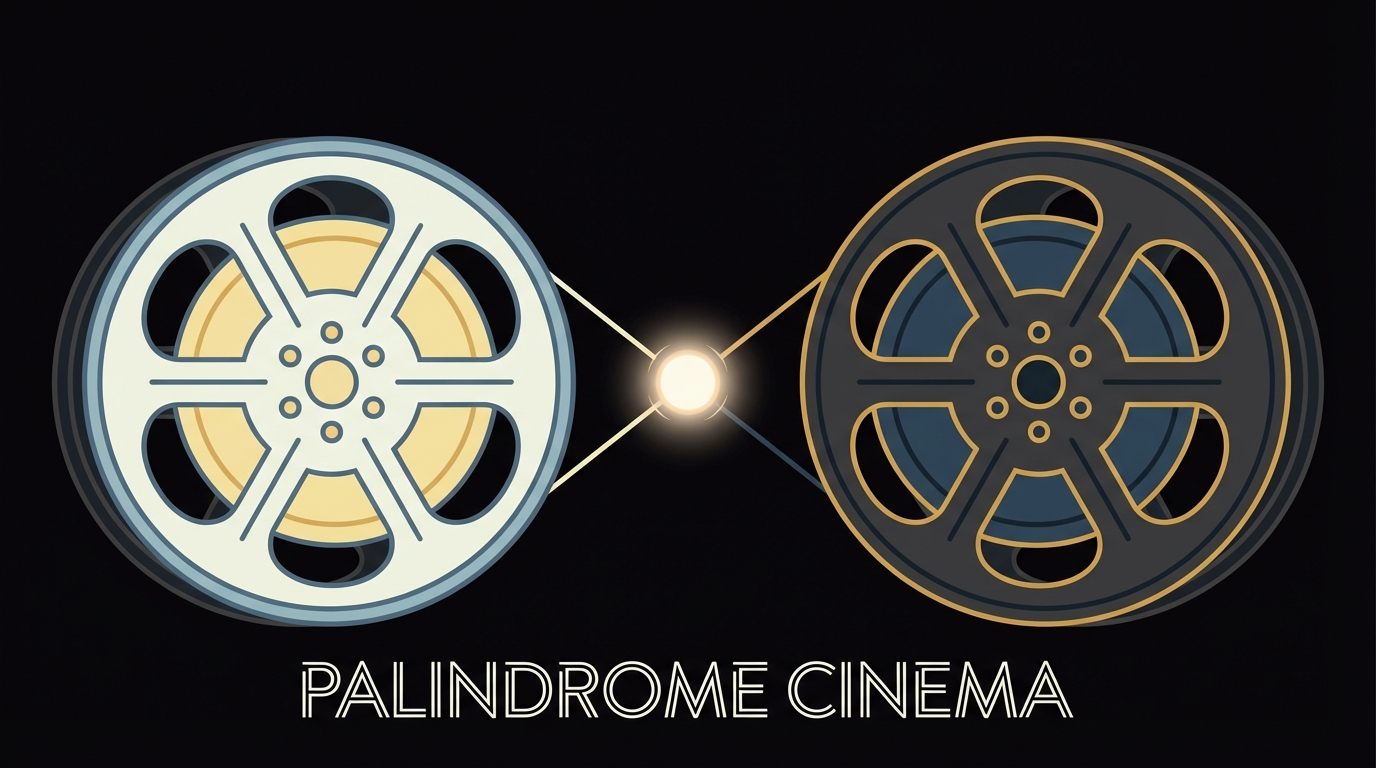
The 119 Minutes framework defines a film structure based on runtime:
- Exactly 1 hour 59 minutes
- Time awareness built into the film
- Palindrome structure (1:59 ↔ 9:51)
- Mirror point at the center
The Simul-Make framework defines a release structure based on pairing:
- Two films, same day
- Shared axis, equal weight
- Each complete alone
- Relationship reveals a third thing
These are orthogonal. A 119 can be a simul-make. A simul-make can contain 119s. Neither requires the other. Both can be stacked.
The eventual home for both frameworks is 119minutes.com — a site with a split personality where visitors can learn about either structure depending on their intention going in.
The website itself becomes a simul-make: two frameworks, one domain, the relationship only visible if you know both exist.
What Comes Next

This document establishes the Simul-Make framework as a standalone concept.
Next steps:
- Web expansion — Visual design, diagrams, the same treatment that 119 Minutes has on its website
- 119minutes.com integration — A sibling path on the existing site, or a subdomain (simulmaker.119minutes.com)
- Production of the founding example — The KA films (Yonaguni + Amazon) as the first live simul-make
- Community documentation — Examples, edge cases, audience reception studies
Summary

| Criterion | Requirement |
|---|---|
| Release | Same day |
| Axis | Shared conceptual foundation |
| Weight | Equal — no primary/secondary |
| Standalone | Each film complete alone |
| Emergence | Together reveal a third thing |
| Design | Intentional from conception |
| Runtime | No requirement |
| Stackable | Yes — with 119 Minutes, with other simul-makes |
The simul-make is not about making two films. It is about designing coexistence.
Framework documented: March 2026 Creator: K.A.