Craft On Craft
One-Line Pitch
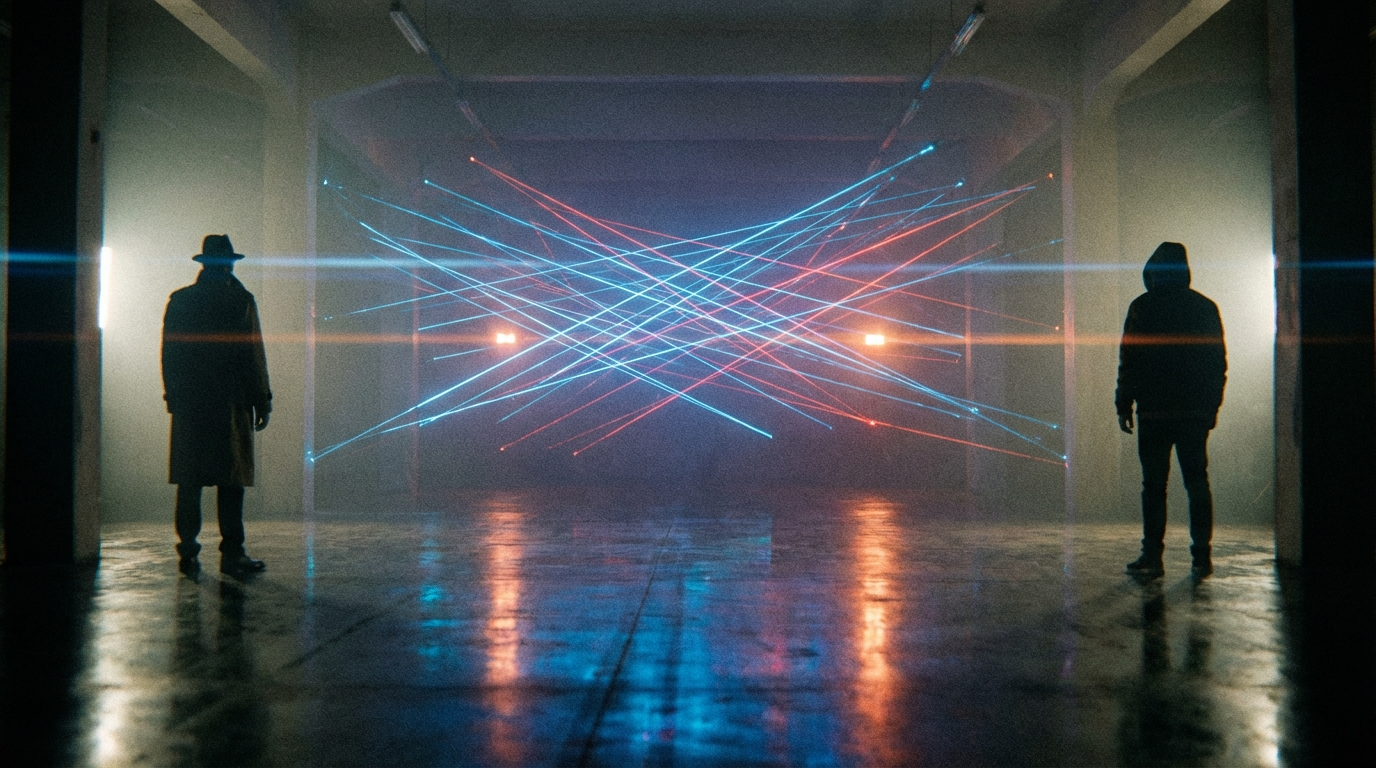
When two trained practitioners meet in direct opposition, what is tested is not strength but signal integrity — whose field holds its shape under pressure.
EchoCraft Subskill · Class: Resonant Opposition — Intent Testing — Presence Duel
What Is a Battle of Wills?
A Battle of Wills is not an argument. It is not a power struggle. It is not a performance of dominance.
It is a structured energetic exchange between two (or more) active practitioners where presence, discipline, and intent are measured against each other in real-time. The field itself becomes the arena. No referee. No scoreboard. The signal either holds or it doesn't.
Victory is not domination. Victory is clarity retention and signal transference — your field remaining coherent while the other's fractures under the pressure it generated.
Core Functions
What a Craft-On-Craft exchange actually does:
🔍 Reveals Structure
Exposes the actual integrity of each practitioner's Craft. The patterns under stress are different from the patterns under comfort. You learn more about your Craft in one real exchange than in months of solo practice.
⚒️ Forces Refinement
Will, rhythm, and emotional control either hold or collapse. The collapse points become your sharpest training material — they're precise, undeniable, experienced rather than theorised.
📡 Validates Signal
The only real test of whether your signal holds shape is external pressure. Solo practice tells you nothing about how your field behaves when a competing field pushes back.
🔄 Creates Growth
Unlike competitions, a Craft-On-Craft exchange can end in mutual calibration — both practitioners leave refined, having measured their depths against something real.
Where It Happens
You don't need a declared duel. Craft-On-Craft engagement begins when two active fields meet with opposing intent. This happens without consent or warning. The skill is in recognising it — and choosing how to engage or disengage deliberately, not reactively.
Mechanics
- Engagement is entered consciously — or it should be. Recognising when an exchange is happening is itself a Craft skill. Most unaware practitioners enter these exchanges and suffer them as "conflict" or "bad days."
- Each move tests signal stability — tone, timing, word choice, eye contact, micro-movement, silence. Every signal either holds the field or concedes ground.
- Resource depth matters — the practitioner whose internal state is deeper will outlast the one performing surface Craft. You cannot fake field depth under real opposition.
- Signal transference is the real mechanism — victory means your coherent field begins to organise the other's incoherence. They find themselves thinking more clearly in the direction you came from.
Mechanics of Entry and Exit
| Phase | What Happens |
|---|---|
| Recognition | Notice the opposing field without reacting. Pause. Assess depth. |
| Engagement | Enter consciously, with your rhythm established before contact. |
| Holding | Maintain signal clarity regardless of pressure. No ego investment. |
| Transference | Let your coherent field do the work. Signal, don't force. |
| Withdrawal | Disengage cleanly when the exchange completes — no lingering. |
Warnings
Ego must be dropped entirely. The test is of the will, not the self-image. A practitioner who needs to win cannot win — the need for victory fractures clarity at the exact moment clarity is the only resource that matters.
Battles entered recklessly — without grounding, without witnessing — can entangle Craft signatures. Two practitioners can leave an exchange carrying threads of each other's patterns. This is not theory. Clean your field after any significant exchange.
The word escalation is important here: an exchange that stays in the realm of signal can descend into Shadow Craft dynamics if either party collapses into emotional reactivity. The descent is not reversible mid-exchange. Prevention is the skill.
Associated Tools
These subskills are directly relevant to Craft-On-Craft:
- Will-Chain Alignment→ — Because signal that fractures between intent and action will fail under pressure before the exchange is three moves deep
- Lenswork→ — Focal compression in real-time opposition — the ability to hold one signal thread while ignoring the noise generated by the other field
- Echo Camouflage→ — For strategic misdirection before or during an exchange
- Craft Rhythm — Establishing and maintaining your internal rhythm under field pressure
Summary
A Craft-On-Craft exchange is not a fight. It is a calibration. When entered with clear will and no ego attachment, it is the fastest form of growth available in the discipline. The field doesn't lie. Neither does the result.
Connections
- EchoCraft — The Field Manual→ — The full system
- Will-Chain Alignment→ — The signal integrity prerequisite
- Lenswork→ — Focal compression under opposition
- Echo Camouflage→ — Signature masking in the exchange